Saturday, May 26, 2012

Education by numbers

Very interesting picture about education worldwilde with focus on US (image credit: Microsoft) .


The most interesting fact to me is that in US less than 15% of college undergraduates are currently pursuing degrees in science or engineering and that number is doubled in India and it's even bigger in China with less than great 40 %. Also, I would like to point out that even though there is more women than men in US colleges, still less than 10 % of American engineers are woman.
What do you think about this facts?

Wednesday, May 16, 2012

Exam stress

I didn't write for a while  because I had tests at my college but I'm back now :)


Instead of writing about  well-known exam stress, I'll list few things that can really help you  reduce exam stress. Well at least they helped me.

Create a study schedule and hold to it!
To prevent mental fatigue, take a short break (but avoid television and loud music) !
Maintain a regular sleep pattern!
Food rich in vitamins and proteins, such as green leafy vegetables and fresh fruits, are a must (the nutrients will help your brain stay sharp)!
Stay away from distractions!
Think positive!
Every day take some time for short exercise and relaxation!

From the list above most important is to create a study schedule. A little bit of organization (even if it's organized just in your head) can do miracles.
And most important - just do it! Ok, I realized it sounds like Nike ad :/ but i just wanted to say that every  beginning is hard and I know that lots of you are pretty lazy when it comes to study, but believe me - just move your finger next to that little button and shut down internet/tv, open a book and see what will happen. After just 2 min it will be alot easier for you to continue studying.
It's also important that after you manage to study for an hour (or longer :O ) you reward yourself with a break.

Is it just me or the feeling of satisfaction which comes after studying and also feeling that you did something useful is really really great and fulfilling?
Do you have some of your own tricks how to reduce exam stress?

Saturday, April 28, 2012

College experience - Part 2: Being a woman in engineering school

I have lots of things to say on this topic, but I'll try to make it short and simple and maybe add some things later in some other post. First of all, I most warn you that I will mostly focus on my own college experience and opinion, not so much on some statistics. This is because like I said this is very complicated subject and I'll try to keep it simple. However, I would like to start with comic (everyone loves comics!) about some more general problem of lack of women in egineering industry. Click for source under the comic.

                                                                             (source)

Some other time I'll write more about this, but for now I want to point out some statistics and just leave it for you to think whatever you want to and then switch to writing about my experience in engineering school. 

       NSF Statistics on Women, Minorities, and Persons with Disabilities in Science and  Engineering

I am very curious as to why the number of women pursuing engineering degrees has effectively stayed the same, while the number of women attending college grows by about 20,000 each year?
I'm not even start on gender pay gap because it's not only related to engineering.

Ok, now back to the my story. 
I don't have very bad experience but I remember a couple of unpleasant situations, and sometimes I noticed that I was treated differently. I attend Faculty of electrical engineering and computing in University of Zagreb. There is 20 % of women in this faculty and this number hasn't changed for years. Ok, thirty years ago was approximately 10 %  but change is insignificantly if we keep in mind that lot has changed , for example lots of new courses were introduced. 
Few times some of the professors blurted jokes about blondes being stupid and yeah i felt very awkward, but also there were a lot more jokes about engineers social life and their stereotypical (but baseless ;) )lack of success with women, so I can't say they were malicious or that i felt in any way discriminated by professors. Also some of them tend to think women are more responsible.
BUT, unfotunately, I can't say the same thing about some professors assistants (dipl. ing.). I'm not so surprised because in most cases to be professor you have to be  highly intelligent, and that doesn't have to be the case with assistants. First, I have to stress that I have encountered some incredible assistants who work in my college and who helped students in so many ways and worked many unpaid hours to give us instructions and prepare us for tests. However, more than few times at lab exercises, where our work is evaluated by assistants, I felt slightly discriminated against because of my gender. I noticed that I'm longer examined than boys and I feel like many assistants approach me with prejudice that I know less or that I copied the codes. And yes, you can say that's just a feeling, but one time I was examined together with a boy ( we all worked in pair because there weren't enough computers) and assistant only asked him questions  but I answered all of them because the boy didn't know answers. Just one question even I didn't answered. Both of us were shocked when assistant gave noticeably more points to the boy. Unfortunately that happend my first year at college so I was scared to even ask assistant for explanation, but i don't think I would change something even if I did. 
I'm not going to lie, when I raise my hand for help, in 80 % of cases lots of assistants will ignore boys hands. But that isn't something I would like to put onto 'plus side', that's still discrimination because it's based on sexism, and believe me or not- i just one to have fair chances.

There's a lot more things that I would like to say on this subject but not for now. I would like to hear your opinion or your experience as student, professor or assistant. 

Thank you for reading and following me.

Wednesday, April 25, 2012

Brief look at 5 world most famous colleges

Unexpectedly difficult is to find a universal list of top universities, probably because it does not exist as such. It is also not fair to compare different types of colleges, so I decided to bring only an overview of the most famous ones. Also, I had a really hard time not including some great colleges just because they aren't famous as this five, so if your favourite college isn't among this five don't hate! But you have to agree, getting a college degree from any of this colleges or just being able to spend some time within this campuses would be more than nice. I'll give you some short interesting facts. Let's start:

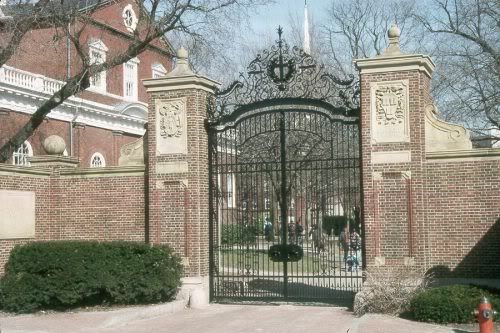
1. HARVARD


Harvard is the oldest institution of higher education in the United States, established in 1636. Harvard University has 12 degree-granting Schools in addition to the Radcliffe Institute for Advanced Study. Forty-four current and former faculty members are nobel laureates.
Families with students on scholarship pay an average of $11,500 annually toward the cost of a Harvard education. More than 60 percent of Harvard College students receive scholarship aid. School color -CRIMSON :)

2. OXFORD


As the oldest university in the English-speaking world, Oxford is a unique and historic institution. There is no clear date of foundation, but teaching existed at Oxford in some form in 1096 and developed rapidly from 1167, when Henry II banned English students from attending the University of Paris.
Today there are 38 colleges and 6 permanent private halls at Oxford. They also have program of financial support for undergraduates. School color- BLUE.

3. YALE


Yale University is one of the United States' top undergraduate and graduate institutions. It comprises three major academic components: Yale College (the undergraduate program), the Graduate School of Arts and Sciences, and the professional schools. Yale’s roots can be traced back to the 1640s. Yale’s 260 buildings include contributions from distinguished architects of every period in its history. School Colors - Yale BLUE  and WHITE.

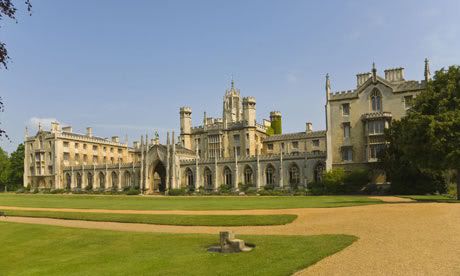
4. CAMBRIDGE


The University of Cambridge  is a public research university located in Cambridge, United Kingdom. It is the second-oldest university in the English-speaking world (after the University of Oxford), and the seventh-oldest in the world. . The university grew out of an association of scholars in the city of Cambridge that was formed in 1209, early records suggest, by scholars leaving Oxford after a dispute with townsfolk
Cambridge comprises 31 Colleges and over 150 departments, faculties, schools and other institutions. School color- Cambridge BLUE.

5. PRINCETON


Widely considered to be one of the leading research universities, Princeton is one of the best places in the world to get an undergraduate education. Chartered in 1746, Princeton is the fourth-oldest college in the United States and has one of the country's best need-based financial aid programs. Renowned for its park-like beauty, Princeton's open campus features extraordinary architecture. School colors- ORANGE and BLACK.

Which one would you choose? 

Tuesday, April 24, 2012

College experience - Part 1: The (un)importance of lectures

It's been a few years now since I graduated from high school and there is one thing I surely don't miss and that is obligatory attendance at lectures. Yes, we have some kind of lectures like practice in the lab or presentation of our own program code which are required, but in fact we do not need to attend  lectures if we don't want to. It should be emphasized that I attend Faculty of electrical engineering and computing which is quite different from non-technical universities.

pic of me with brown hair, red eyes and arrow in the head graduating from high school

However, most of the non-technical and even some technical univeristies still have some kind of penalty if you miss the lecture. I can undestrand that is obligatory to attend speaking exercises and such, but apart from that, what is the point of forcing students to be in the class if they don't want to, if they are bored and don't learn anything from just sitting there, if they think they already know that subject, if the professor is bad in the transfer of knowledge and so on and so on? Who benefits from that ?
I just don't get it. At the age of 20 you are a grown person and if you think you can benefit from going to lectures- go to lectures, If you know you better learn at home by yourself- don't go to lectures and spend that time on something else.
For example, we are not obligated to go to lectures so I had to decide and found out from which lectures I would benefit and which of them are just waste of my time. It's very nice feeling when you can decide for yourself at 7 a.m. whether you will go to college or stay in bed and get some sleep so you can have energy later in the day for some quality study, or for doing nothing- why not?


In conclusion, we should all ask ourselves whether or not the person at the front of the lecture is adding anything of value to the raw information being presented.  If not, we should spend our time teaching and learning properly.

I really want to hear your opinion on this one. Especially from teachers, professors, students and of course from all of you who disagree with me!
Thank you for reading :)

Sunday, April 22, 2012

Global action week 2012

Global action week  2012 starts today!
Each year during its Global Action Week, the Global Campaign for Education and its members all around the world give profile to one of the core areas of the Education For All agenda and in 2012 this is early childhood care and education.
One of the major activities already announced is a major drawing competition in the Asia-Pacific region to tie in with the Big Picture activity. Participants are invited to send photos or drawings on 'What is a good early childhood?'

I got some of them for you, coincidently they are both from Spain :) . For source click on the name under the picture.


Some kids weren't so impressed with the first day at school :


There are really some great pictures, this last one made me laugh, but I suggest you go check it yourself!
This is the link http://globalactionweek.org/pictures and ofcourse all credit goes to kids and Global Action Week, I don't own the pictures.

Friday, April 20, 2012

Why I write about education

Like most bloggers, after just few published posts and stunning zero comments on them, I feel obliged to tell you more about myself and explain to you why did I even create this blog.

I'll jump straight to the point - no, i'm not teacher or professor - i'm just a student but i love writing, doing resarches, reports and such, in fact anything that has to do with writing.

But what  interest you more is probably why I write precisely about education, schools, school programs, etc. In order to answer your question, I have to say something little bit more about myrself.

Like every average schoolgirl in my country, and that is Croatia, I went to school at age six. What might not be so average is that I didn't go to kindergarten or any kind of preschool before elementary school unlike most of my peers. Understandably I was extremely scared of what awaited me in school. I knew neither read nor write, and I am quite sure I did not even know how to properly add small numbers. Furthermore, at some kind of preschool test I didn't know to show to the pedagog which arm is left and which is right and when he point at the picture of a sheep asking me which animal is it, I panicked and forgot how to say sheep. My brilliant academic start doesn't end there. Among two others in the class, I had to repeat reciting the alphabet in front of the whole class for few times because I always messed up the order of some letters. The first score I got was a F in math. That test I buried at grandma's garden. I'm not kidding. I tore it and then buried it so my mum doesn't find out.
Things were not going in my favor.

Before we all conclude the worst about me I'll shift to the part with bragging.
I caught up with my classmates and soon I was the fastest and best reader in class. As soon as I learned how to write, I started to write outside of the school just for fun. My first story ever was about some caterpillar who turned into a beautiful butterfly. It's important to state that it was the BEAUTIFUL butterfly because I used that attribute quite a lot in that. Since that, I was writing constantly, no matter is it writing a story, poems or writing for school newspapers. Besides school newspaper, my work was published in a few local books and other repertories. Nothing big.

Besides writing, I was inetersted in almost all of school subjects and I just wanted to know more about everything. It was hard for me to choose college because it meant I need to choose one field and focus on it. I chose programming. I find it challenging and really like it.
Being straight A student, in elementary and high school, meant also being constantly called nerd and dealing with lot of prejudices, but I was always proud and I have to say I didn't have some especially awkward situations. However, it always bothered me, and in the same time I wondered, why lots of students find shameful to be a good student. Why is 'cool' being bad student? Is our society really that disturbed?

And that is exactly why i decided to write about and promote education.

Hope you'll like it.


P.S. pic related, it's me ;)
NOTE TO MYSELF: start taking  pictures of yourself so you don't have to post the one where you look like a complete idiot


Thursday, April 19, 2012

Shocking look at literacy


In my last post I really wrote a lot about early childhood education, so this time I opted for a slightly different approach. They say that a picture is worth a thousand words, let's try this theory! This time I bring you the interesting maps of  literacy rates around world. CLICK for larger images or go to source.

(source)


The consequences of illiteracy are profound and have big impact on choosing your life path. They flow from the denial of a fundamental human right to education.

Nearly a billion people entered the 21st century unable to write or read and two thirds of them are women. The total includes more than 130 million school age children, 73 million of them girls, who are growing up in the developing world without access to basic education.


(source)

Once more, it's obvious that there is also a big problem of gender differences in schools, especially in poor countries, on which i will talk more some other time. The education of girls has become a top priority. The cultural and political obstacles to gender equality are being addressed and education systems at every level are being made more sensitive and attentive to gender issues. There is definitely some progress going on. Here is the map of literacy rates and progress for woman older than 15. The main focus is ofcourse on countries where gender discrimination is the highest for whatsoever reason:

(source)


Wednesday, April 18, 2012

The importance of education - Early childhood


Early childhood education is defined as the formal teaching and care of young children by people other than their family or in settings outside of the home. 'Early childhood' includes the time before the age of schooling which is five or six years in most countries, though the U.S. National Association for the Education of Young Children (NAEYC) instead defines 'early childhood' as before the age of eight.

However, it's not that important whether it is five, six or eight. What we will try to figure out in this post is how much this education, or a lack of it, is important in this period, i.e. what impact it has on children and their further development.

Everyone agrees that an early childhood is a time of remarkable brain growth and that these years lay the foundation for subsequent learning and development. The subject of debate is whether this growth should be stimulated by formal education programs or should it entirely depend on parents and natural children's curiosity about the world. There are many philosophies and methodologies in the field of early childhood education. Over the web I came across many articles that support these programs, but what is more or less expected, they are all written or sposored by the institutions that will benefit from such programs. Some deeper research showed that there is also some articles that dispute the importance of an early education of children.

On one hand, even distinguished organization like specialized agency of the United Nations UNESCO supports and have their own program for early childhood education. UNESCO, as they claim on their  official website,  advocates for Early Childhood Care and Education (ECCE) programmes that attend to health, nutrition, security and learning and which provide for children’s holistic development. It organized the first World Conference on ECCE in September 2010, which culminated in the adoption of a global action agenda for ECCE called Moscow Framework for Action and Cooperation: Harnessing the Wealth of Nations. As a follow-up to the World Conference, UNESCO works in partnership with Member States, partners and other stakeholders to encourage timely and effective implementation of the Moscow Framework so that all young children develop their potential to the fullest. Furtermore, Global Action Week is a worldwide annual campaign organized by the Global Campaign for Education (GCE) to raise awareness of the importance of Education for All and UNESCO actively supports the campaign by organizing activities in its Headquarters and Field Offices, mobilizing networks and encouraging Ministers of Education and all EFA partners to participate. This year's Global Action Week takes place in few days-  from 22nd to 28th April. The slogan is "Rights from the Start! Early Childhood Care and Education Now!".

Global Action Week 2012 will focus on the first of the six Education for All (EFA) Goals  aim to meet the learning needs of all children, youth and adults by 2015. And this are all six i found on their site:


Goal 1 
Expanding and improving comprehensive early childhood care and education, especially for the most vulnerable and disadvantaged children

Goal 2
Ensuring that by 2015 all children, particularly girls, children in difficult circumstances and those belonging to ethnic minorities, have access to, and complete, free and compulsory primary education of good quality.

Goal 3 
Ensuring that the learning needs of all young people and adults are met through equitable access to appropriate learning and life-skills programmes

Goal 4 
Achieving a 50 per cent improvement in levels of adult literacy by 2015, especially for women, and equitable access to basic and continuing education for all adults.

Goal 5
Eliminating gender disparities in primary and secondary education by 2005, and achieving gender equality in education by 2015, with a focus on ensuring girls’ full and equal access to and achievement in basic education of good quality.

Goal 6 
Improving all aspects of the quality of education and ensuring excellence of all so that recognized and measurable learning outcomes are achieved by all, especially in literacy, numeracy and essential life skills.

There are many others early childhood programs. Some like Bankstreet’s Developmental Interaction Approach, based on the theories of Jean Piaget, Erik Erikson, John Dewey and Lucy Sprague Mitchell,  stresses that the optimal educational process maximizes children’s direct and rich interactions with a wide variety of materials, ideas and people in their environment. The approach aims for actively involving children in acquiring competence. Choice, active investigation, independent pursuit and learning through discovery are dominant components of the learning climate. Teachers seize every opportunity to promote cognitive development by creating a climate that encourages questioning, exploration and children’s growing understanding of patterns, rhythms and relationships in the ideas and environment around them.

The Courtyard, another preschool and afterschool childcare program,  emphasizes that during the preschool education years, children should learn important items that will help them develop a strong knowledge basis needed for academic success like problem-solving skills, an ability to "inter-translate" between language and mental images so that knowledge and thoughts can be expressed through language (productive language) and knowledge can be formed from incoming information (receptive language), attention management skills, comprehension monitoring and persistence.


Research that is mentioned a lot is one that was conducted by Chicago’s publicly-funded Child-Parent Centers who have served almost 100,000 3- and 4-year-olds since 1967. They investigated the effects of participation in the Chicago Child-Parent Center and Expansion Program from ages 3 to 9 on school dropout by age 18 for 1,159 youths. Program provides child education and family support services from preschool through second or third grade in 20 sites in Chicago’s poorest neighborhoods. After comparing children in 20 program sites with children who attended schools in similarly poor neighborhoods without the intervention, they found that preschool participation was associated with a 24% reduction in the rate of school dropout and that participation for 5 or 6 years was associated with a 27% reduction in the rate of early school dropout relative to less extensive participation.

However, let's hear another opinion.


What most opponents of early childhood education are quick to point out is that kids who were in some kind of an early education program may have an advantage for only the first two or three years of school. At about third or fourth grade, most students who have not had early childhood education have caught up academically and socially. Some evidence shows that early daycare may actually be a detriment rather than a benefit to young children. Longer stays at home with a single caregiver are argued to be more intellectually stimulating to young children. As well, the child who stays at home is more likely to benefit from breastfeeding for longer, which many say is of great advantage to the child. Most experts agree that early childhood education works best in low pressure, social, and friendly environments. It is also more effective when preschool is only a small part of a four or five year old’s day. Preschool that bleeds into long hours at daycare may not carry the same benefit for children, because it means more time away from parents. Obviously, not all programs are equally beneficial, and can vary depending upon funding, teacher to child ratio, and teacher experience.

To sum up, in my opinion, the early childhood programs can only benefit your children if they are chosen carefully and if you manage to balance the time between such programs and quality time you spend with your children on your own.


I'd be glad to hear your opinion.


Tuesday, April 17, 2012

The importance of education - Introduction


There is a strong connection between education and knowledge. Education leads to knowledge and therefore is one of the main subjects of this blog.

Education is very important for an individual's success in life but also has a major impact on the society as a whole.  It gives the individual the necessary social and technical skills, and directs the individual towards the desired occupation. On the other hand, it is the foundation of the society and its culture and brings with it economic, political and social progress and stability. High correlation was observed between the percentage of highly educated people and maintaining a healthy society that operates on all levels, including good health and social system. Every government which is considered to be modern should pay great attention to moral and economic investments in education such as school constructions, student scholarships, colleges support, encouragement of early childhood education and other similar education programs. The reason is simple - without education there is no progress and without progress there is no successful country.
Students and pupils who are equipped with knowledge and skills have the ability to participate effectively in the society and contribute to the development of common values​​. Education not only enables individuals to put their potential to the best use and do something productive in the upcoming future, but also plays a main role in shaping an individual to be a better, responsible citizen and an active member of the society. Also, every society has to have specialized individuals that require extended education to fulfill certain main positions. These persons are normally known as professors, doctors, engineers, etc. Education has been a higher part of every culture on earth and it is a systemic project. Importance of education as a concept should be instilled in children from an early age.

Education is much more than just bookish knowledge. It means opening your mind to new things, cultures, opinions  and teaches us to be tolerant and rely on our own judgment, thinking and abilities.
It makes a person with the ability of rational thought and question.

I'll end with an interesting quote of a French poet, journalist, and novelist- Anatole France (1844 - 1924) :

'An education isn't how much you have committed to memory, or even how much you know. It's being able to differentiate between what you do know and what you don't.'

What does education mean to you?